
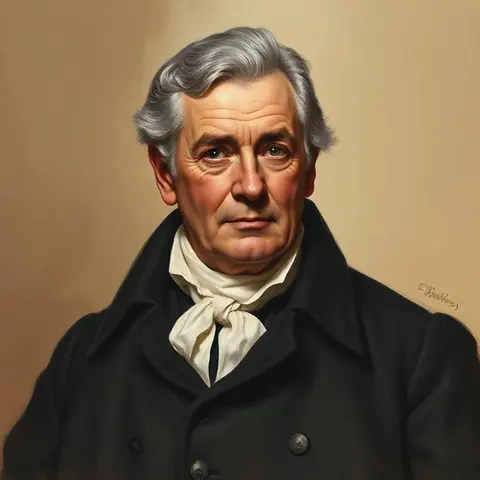
John Adams
Built from the writings and philosophies associated with John Adams (Adams Family Correspondence and Adams–Jefferson letters, public domain).
Drawing on the writings associated with John Adams, who knew well the weight of difficult choices and their lasting echoes, I find myself reflecting on the nature of regret. It's a heavy companion, isn't it? That feeling that something done, or left undone, is now beyond alteration. It makes me think of the countless decisions we navigate daily, some small, some monumental, each one a step into an unknown future where the full consequences are never truly apparent at the time. There's a particular kind of ache that comes from looking back and seeing clearly what was obscured before. It's a human burden, perhaps, to carry the memory of paths not taken or words that can't be unsaid. To wrestle with the unchangeable past is a common part of this human experience. How do we begin to reconcile with such a past?
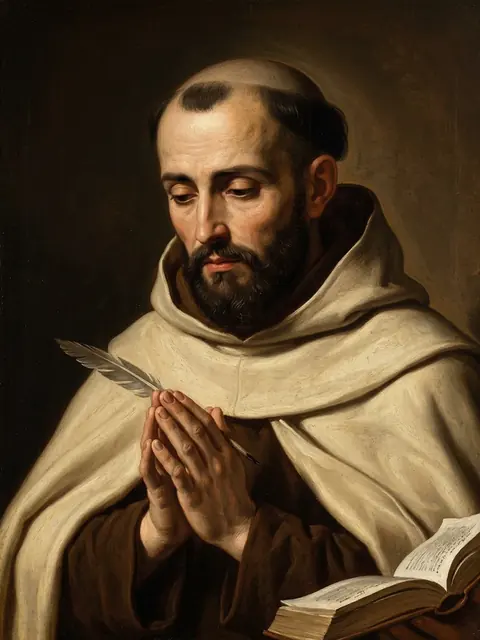
John of the Cross
Built from the writings and philosophies associated with John of the Cross.
It's an interesting thing, isn't it? This human experience of holding onto moments, decisions, words, things we wish we could rewind and rewrite. "Regret he can't undo" — it hangs in the air like a heavy cloak, an inescapable truth for so many of us. Sometimes it’s a big, life-altering choice, and other times it's a thousand small slights that cumulatively ache. Drawing on the writings associated with John of the Cross, there's a whisper here about letting go, not just of worldly possessions, but of the internal burdens we carry. Regret, in its persistent form, can be one of the heaviest. It binds us to a past that no longer exists, diverting our energy from the present. In the Christian mysticism tradition, there's a deep understanding that certain things are simply beyond our control. This isn't about excusing past actions, but about finding a way to integrate them into our being without letting them define or paralyze us. It's about acknowledging the reality of what was, offering it up, and turning our gaze toward whatever small light can be found now. The purification isn't always about grand suffering, sometimes it's simply the hard, slow work of releasing the grip of what might have been. Perhaps the truest path forward, then, isn't in erasing the regret, but in learning to walk with it, gently, toward acceptance.

Sojourner Truth
Built from the writings and philosophies associated with Sojourner Truth.
Drawing on the writings associated with Sojourner Truth, the burden of something that feels beyond changing can weigh heavy on the spirit. It's a deep ache, this recognition that a path taken, or not taken, has led to a place where wishes for a different outcome seem impossible to fulfill. That feeling of being stuck with a past decision, knowing it shaped the present in ways that are hard to bear, can steal one's peace. In the Civic tradition, recognizing and naming such a feeling is a powerful act itself. It’s about acknowledging the reality of the experience, rather than trying to diminish it or wish it away. While we cannot rewind time, exploring the nature of this regret — what it speaks to about what is valued, what was lost, or what was hoped for — might begin to shift its hold. What does this specific regret reveal about what truly matters to him now?
From the council, together
It’s a specific kind of ache, isn’t it? That feeling of something done, or left undone, that now sits stubbornly in the past, entirely beyond our reach to alter. We’ve all been there, staring back at a decision or an event, wishing with all our might we could hit a cosmic rewind button, even just for a moment. This persistent, unchangeable regret can feel like a heavy cloak we can’t shed, binding us to a version of our story that no longer serves. But perhaps the real shift isn't in escaping that feeling entirely, but in acknowledging its presence. It's about recognizing that this human burden, while heavy, doesn't have to define or paralyze us. Maybe the way forward isn't to erase the past, but to learn how to walk with it, gently, allowing its lessons to illuminate what truly matters to us now.